Lineage & History
Three Centuries of Devotion and Custodianship
The story of this family begins not with Bhai Roop Chand Ji himself, but with his mother, Bibi Surti Ji, whose faith at her own wedding brought a blessing from Sri Guru Hargobind Sahib Ji. That blessing became the foundation for a legacy that continues today — from a son named by the Guru, to a village founded in his honour, to a multi-generational responsibility for the safekeeping of sacred relics.
A Living Timeline
From Bibi Surti Ji to the Present Day
Baba Aakal Ji of Wadda Ghar Receives Sikhi
Wadda Ghar is a well-known village of district and tehsil Moga in Punjab, roughly 20 kilometres to the south-west of Moga town, and seven miles south-west of Dagru railway station. Baba Aakal Ji, a devoted lover of the Guru's house, was a resident of Wadda Ghar. Giani Kartar Singh Kalaswalia records that Baba Aakal Ji received the gift of Sikhi from Sri Guru Ramdas Ji, and that he had made his own home a centre of Sikhi.
Note on dating: The source names no year for this.
Source: Giani Kartar Singh Kalaswalia, Sri Khadgosh Prakash
The Aakal-Waari and the Naming of Wadda Ghar
Baba Aakal Ji had enclosed a very large yard outside the village, in which he kept a great many cows. He would gather their milk and find his joy in serving it to those in need. People commonly called this enclosure the 'Aakal-Waari'. Scholars hold that it is this same 'Aakal-Waari' whose name changed and became known as Wadda Ghar — the Great House. Some scholars hold instead that wandering saints and faqirs who came from outside, moved by Bhai Aakal Ji's spirit of seva, began calling the Aakal-Waari a 'Wadda Ghar'.
Note on dating: The source gives no date for this.
The Birth of Bibi Surti Ji
A daughter was born in the home of Baba Aakal Ji, and Baba Ji gave her the name 'Surti'. Bhai Santokh Singh records the birth in Sri Gur Pratap Suraj Granth, noting that Baba Ji's own mind found its rest in Gurmat.
Note on dating: The source gives a range of years rather than a single date, and states it in the Bikrami calendar; the CE equivalent is approximate.
Source: Bhai Santokh Singh, Sri Gur Pratap Suraj Granth
Continuing Seva under Sri Guru Arjan Dev Ji
After Sri Guru Ramdas Ji, Baba Aakal Ji remained present in the seva of Sri Guru Arjan Dev Ji. From the earnings of his own honest labour he would carry offerings to the Guru with devotion, and receive the joys of the Guru's house.
Note on dating: No specific years are given.
Bibi Surti Ji Becomes a Full Nitnemi
That the household's atmosphere would shape the child's life was only natural. Bibi Surti Ji became a complete nitnemi, keeping the daily discipline of prayer. She had absorbed Gurmat thoroughly. She practised Gurbani at all times and kept striving to stay joined to the teachings of the Guru Sahibaan. Through that practice the values of Gurmat became firmly settled in her life, and she remained engaged in seva alongside her family according to Gurmat.
Note on dating: No dates are given for this period.
Sri Guru Hargobind Sahib Ji Comes to Wadda Ghar
Sri Guru Hargobind Sahib Ji set out from the village of Darauli, mounted on horseback together with his forces, and blessed the land of Wadda Ghar. The Guru stayed five days in this village and then went on into the Malwa region to preach Sikhi. The village chaudhary Rai Bhagmall and Baba Aakal Ji, together with the sangat, performed a great deal of seva for the Guru. In memory of the Guru's coming, Gurdwara Manji Sahib Patshahi Chhevin stands adorned there; the present handsome building of the Gurdwara Sahib was raised in 1927 CE.
Note on dating: The source names no year for this visit.
A Betrothal into a Sakhi Sarwar Household
Judging his daughter to be of an age to marry, Baba Aakal Ji asked the family purohit to search out a match. The purohit settled the betrothal for Bibi Surti Ji with Bhai Sadhu Ji, grandson of Baba Sada and a resident of Tuklani. Baba Sada's family were followers of Sultan Sakhi Sarwar — a Muslim pir revered by both Hindus and Muslims, and known among his devotees by a great many names, each arising from some particular attribute.
Note on dating: No date is given.
A Father's Concern, and His Counsel
When Baba Aakal Ji learned that Bibi Surti's prospective in-laws were Sakhi Sarwarias, great anxiety entered his mind. He began to think about his daughter's future, and to make ardas before Akal Purakh for the firmness of his child's Sikhi. Bhai Santokh Singh records the counsel he gave her: that her in-laws' house is Sultani, that she must never accept it, and that she must hold to the Satguru with her mind fixed upon him. Giani Kartar Singh Kalaswalia records the same counsel — do everything together with them, but never let Sarwari worship make you forget Sikhi; keep the Satguru in your mind, and do not forget Gurbani.
Note on dating: No date is given.
Source: Bhai Santokh Singh, Sri Gur Pratap Suraj Granth; Giani Kartar Singh Kalaswalia, Sri Khadgosh Prakash
The Wedding and the Doli's Departure
On the appointed date, Bibi Surti Ji was married to Bhai Sadhu Ji, a resident of Tuklani. After the wedding, Bibi Surti Ji was seated in a doli and sent on her way from Wadda Ghar towards Tuklani.
Note on dating: The source says only 'the appointed date'.
The Sound of Kirtan at Darauli
As she travelled and the doli drew near the village of Darauli, the sweet sound of kirtan fell upon Bibi Surti Ji's ears. When she asked the kahaars — the palanquin bearers — to find out about it, it emerged that Sri Guru Hargobind Sahib Ji had come to Darauli to his brother-in-law Bhai Sain Das Ji, and had a diwan seated there; the melodious sound of kirtan was coming from that very place. Hearing it, Bibi Surti Ji's mind became joined to the Guru's feet.
Her Bracelets Given for a Glimpse of the Guru
The wedding party had already gone on ahead, and the kahaars were carrying the doli forward slowly. Suddenly the thought came into Bibi Surti Ji's mind that once she reached her in-laws' home her whole life would have to pass among Sakhi Sarwarias — so why not take darshan of the Guru on the way. She asked the kahaars to stop the doli and requested them to take her for the Guru's darshan, but they would not agree. When she saw that they would not consent, she took off her own kangan and gave them to the kahaars; tempted, the kahaars agreed to carry her into the Guru's darbar.
Source: Giani Gian Singh, Itihaas Riyasat Bagarian
Darshan in the Guru's Diwan
Bibi Surti Ji stepped down from the doli and reached the place where Sri Guru Hargobind Sahib Ji's diwan was seated. Going into the diwan she bowed to the Guru and sat down close by. After the bhog of Asa Ki Var, the Guru asked Bhai Bipi Chand Ji about the newly-married girl seated in the diwan. Bhai Bipi Chand Ji told him that she was the daughter of Bhai Aakal Ji, an utterly devoted servant of the Guru's house — herself a devotee of the Guru's house and firmly settled in Gurmat. Still in her bridal clothes, Bibi Surti Ji came before the Guru, offered him the sweets she was carrying from her parents' home, and did matha tek. When the Guru asked, she told the whole account: that she was firmly settled in Gurmat, but that her in-laws' family were devotees of Sakhi Sarwar.
Source: Gur Bilas Patshahi 6
The Guru's Blessing
Giving Bibi Surti Ji his blessing, the Guru praised her firmness in Gurmat. Bhai Santokh Singh records the Guru's words: that a new writ would now be written in her name; that her father was a Sikh, and by that she too would cross over; that she should fulfil her duties in her in-laws' home; that the gift of Sikhi was given to her by him; that many Sikh sons would be hers; and that her husband too would become a good Sikh and walk the path of Gursikhi.
Source: Bhai Santokh Singh, Sri Gur Pratap Suraj Granth
A Drawn Sword, and a Life Changed
When Bibi Surti Ji's doli did not rejoin the wedding party for a long while, her father-in-law Sada Ji and her husband Bhai Sadhu Ji came searching and arrived at the Guru's darbar. Both father and son were greatly troubled, fearing that so grave a disobedience would bring Sakhi Sarwar's wrath upon them, and Sada Ji instructed his son to bring his wife and reason with her. Bhai Sadhu Ji reached the darbar and saw Bibi Surti Ji seated at the Guru's feet, receiving his blessing. Anger took hold of him and he drew his sword from its scabbard to strike her down. But when Bhai Sadhu Ji's eyes met those of Sri Guru Hargobind Sahib Ji, he became calm in an instant. He let the scabbard fall, took hold of the Guru's lotus feet, and began to repent his error, pleading to receive the gift of Sikhi. The Guru bestowed the gift of Sikhi upon Bhai Sadhu Ji and made him a Sikh.
Source: Bhai Santokh Singh, Sri Gur Pratap Suraj Granth; Giani Gian Singh, Itihaas Riyasat Bagarian; Gur Bilas Patshahi 6
The Shrine at Tuklani Pulled Down
When Bhai Sadhu Ji reached the village of Tuklani with his wife, that very night he pulled down the shrine of Sakhi Sarwar. Giani Kartar Singh Kalaswalia records that deep in the night, when everything had fallen silent, he rose, watching for his moment, left the house without a word with a spade upon his shoulder, and pulled it down.
Source: Giani Kartar Singh Kalaswalia, Sri Khadgosh Prakash
The Birth and Naming of Bhai Roop Chand Ji
Bibi Surti Ji and Bhai Sadhu Ji would go twice a year to the Guru's darbar, and by serving the sangat would receive spiritual bliss. A beautiful boy was born in their home. Bibi Surti Ji and her husband took the child to the darbar of Sri Guru Hargobind Sahib Ji at Sri Amritsar and expressed their joy at having received the gift of a son. Seeing the child's beauty, the Guru gave him the name Roop Chand. Coming to the Guru's house along with his parents, the child took on the influence of Gurmat; and this same Roop Chand, on growing up, became a very great preacher of Gurmat, and received from the Guru the title of 'Bhai' along with many blessings.
Note on dating: The source gives no year of birth.
Village Bhai Rupa Founded, and the Karchha Bestowed
The Guru had the village of Bhai Rupa settled in his very name. The Guru also bestowed upon Bhai Roop Chand Ji a karchha — a ladle — for serving langar. These relics remain even today with his descendants at village Bagarian.
Note on dating: No year is given.
The Arrows of Sovereignty
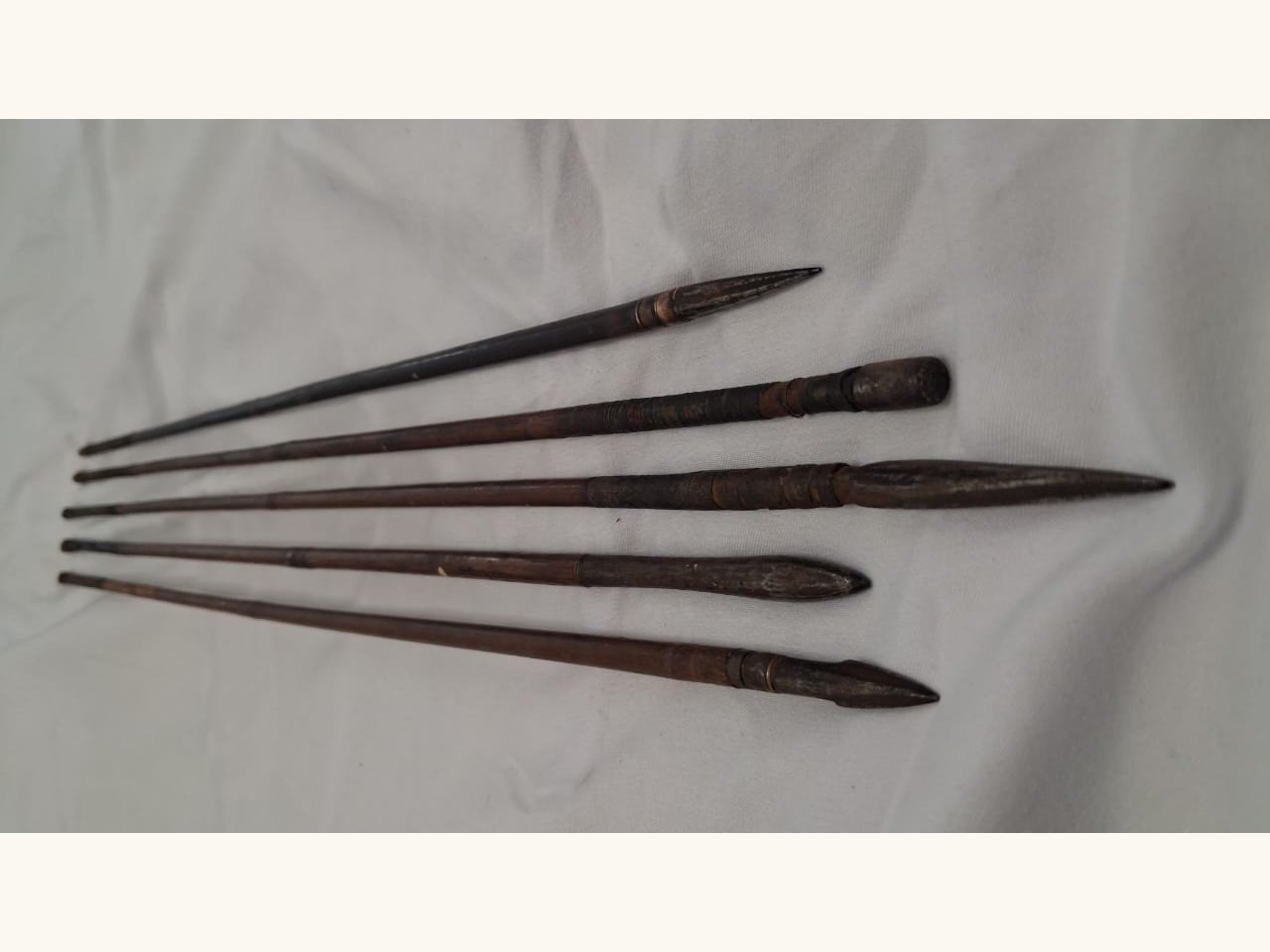
During the decisive Battle of Mehraj fought by Guru Hargobind Sahib Ji against Mughal forces, sacred shastars and Puratan Teer (historical arrows) were used, and were later preserved by the family as symbols of Miri-Piri — temporal and spiritual authority.
The Relics Kept at Nagar Bhai Rupe
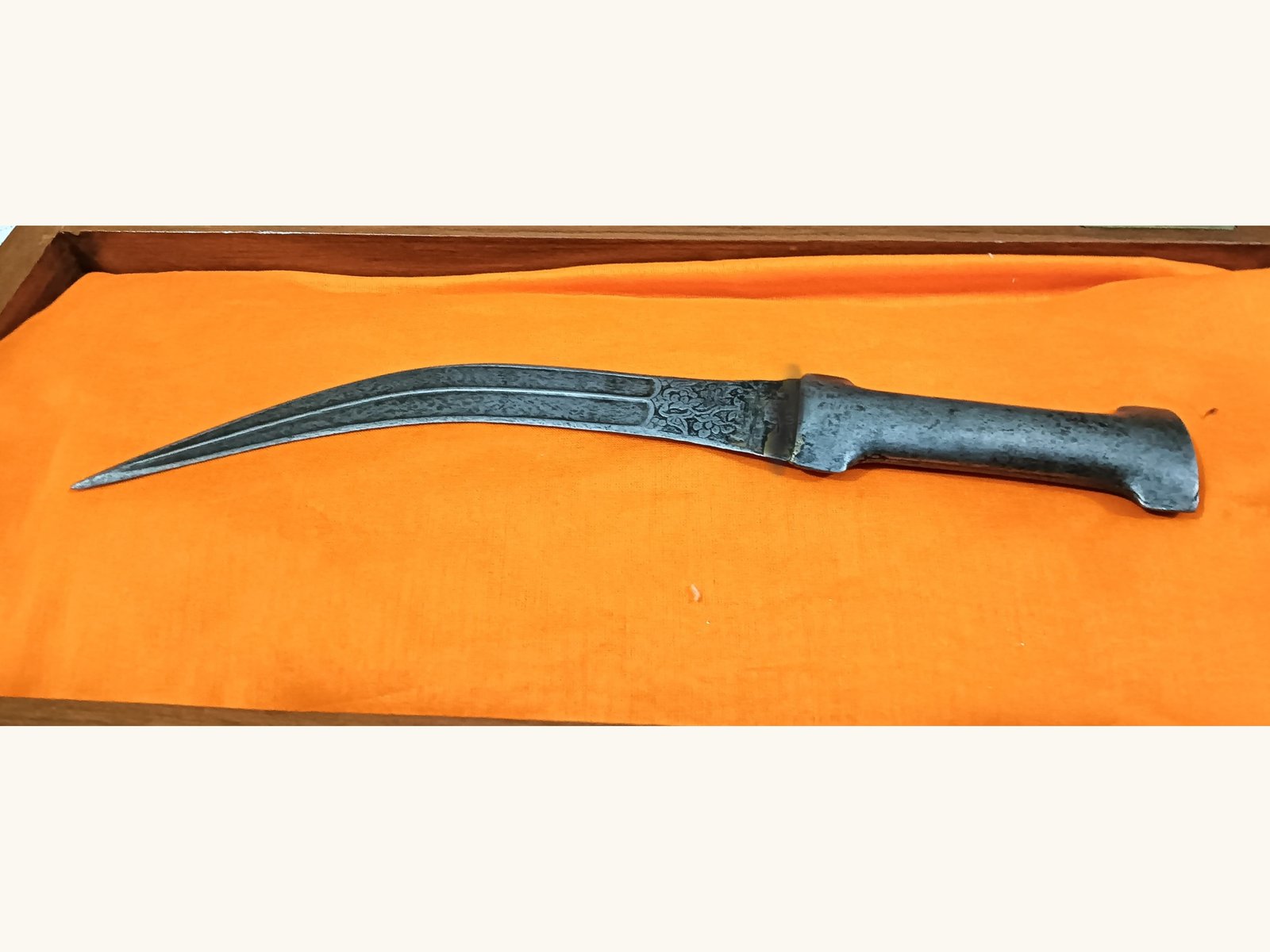
All the remaining shastar and vastar that were bestowed are kept even today at Nagar Bhai Rupe — among them the small Sri Sahib of Guru Hargobind Sahib Ji; his large Sri Sahib, upon which 'Allah' is written; the Guru Sahib's dhals; and the vessels he used. All of these are preserved to this day with great reverence by the family at Nagar Bhai Rupe.
The Family Known as 'Bhai Kian'
Going forward, the descendants of Bibi Surti Ji carried out great works within Sikhi, and this same family became renowned by the name 'Bhai Kian'.
Note on dating: No dates are given.
His Sons Receive Khande di Pahul
Bhai Roop Chand Ji's sons, Bhai Param Singh Ji and Bhai Dharam Singh Ji, remained present in the seva of Sri Guru Gobind Singh Ji and received Khande di Pahul. Bhai Param Singh Ji passed away at Sri Hazur Sahib, Nanded, and Bhai Dharam Singh Ji took leave of Guru Sahib and returned to the village.
Note on dating: No specific years are given.
The Blessings of Sri Guru Gobind Singh Ji
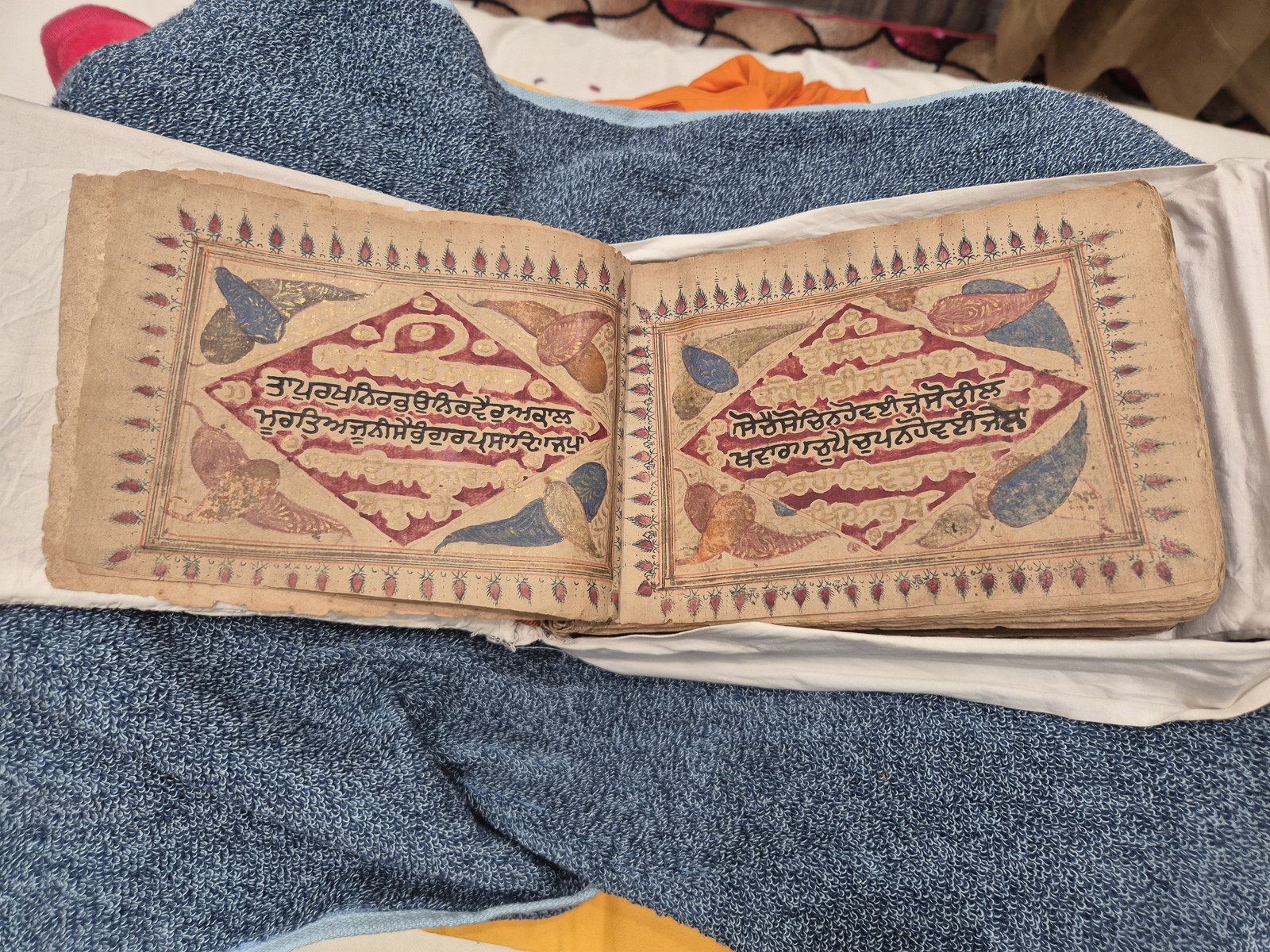
At the time of giving Bhai Param Singh Ji leave, Sri Guru Gobind Singh Ji bestowed a pothi of Gurbani, a kirpan, a small kirpan and a small khanda. Guru Gobind Singh Ji also bestowed the shastar of the dumala, and many other blessings besides. These are kept preserved even today in Nagar Bhai Rupe, while some relics — including Guru Gobind Singh Ji's own handwriting and the shastar of the dumala — are kept preserved at Bagarian Bhai Ke.
Note on dating: No specific years are given.
The Passing of Bhai Roop Chand Ji
Bhai Roop Chand Ji departed this world on Sawan Vadi 1, Sammat 1766 Bikrami. At the place where his final rites were performed, a village by the name of 'Bhai Ki Samadh' came to be settled.
Note on dating: The source dates this in the Bikrami calendar; the CE equivalent is approximate.
'Gaddian da Dhani' — Master of the Carts
By local tradition it is commonly held that Bhai Roop Chand Ji would go twice a year to the Guru's darbar, carrying the offering of dasvandh from the Malwa. The road was one of extreme difficulty: several streams ran across the way, the Sutlej river also came in the path, and on the road to Sri Amritsar the Beas had to be crossed as well. Once, several carts were loaded with the offering and travelling to Sri Amritsar, and crossing the Beas on the way proved hard. Everyone made a request before Bhai Roop Chand Ji to remove this difficulty. Bhai Sahib Ji made ardas, set his own cart at the front, and told them all to come behind. All of them reached the Guru's darbar safe and sound with the offering. When someone recounted this to the Guru, he gave Bhai Roop Chand Ji, in the form of a blessing, the words "Gaddian de Dhani" — master of the carts. To this day the tradition holds in the area around village Bhai Rupa that before setting a cart, tractor or trolley in motion, it is first said: "Mann utte beliya, Bhai Roop Chand Gaddian de Dhani nu" — and only then is the vehicle started.
Note on dating: Recorded as local tradition, with no date given; the account is placed here for narrative order only.
Source: Gi. Gurdit Singh
Hukamnama of Baba Banda Singh Bahadur
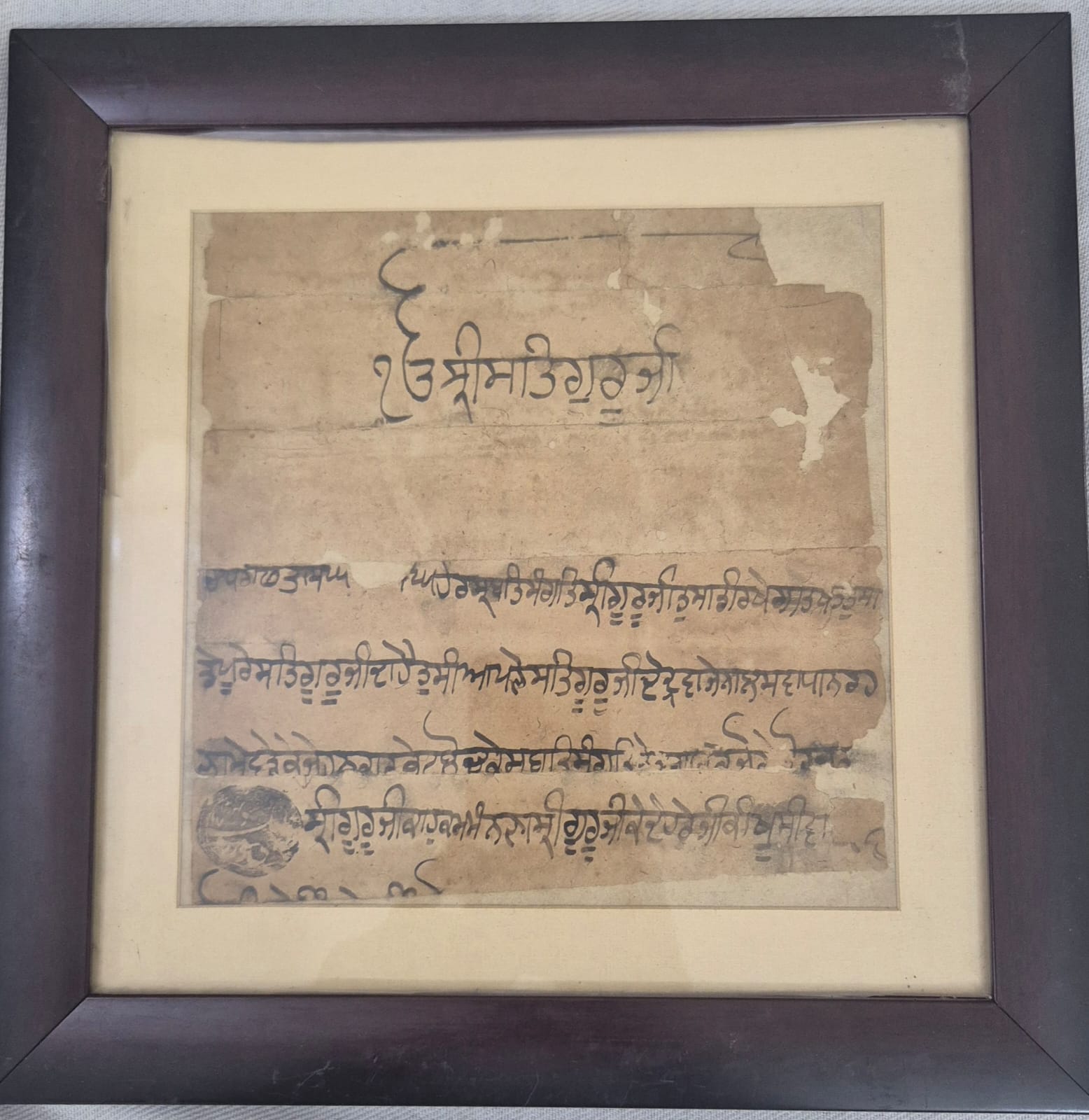
As Sikh sovereignty established itself across the Punjab, Baba Banda Singh Bahadur issued official Hukamnamas recognising the contributions and standing of the sangat and of this lineage.
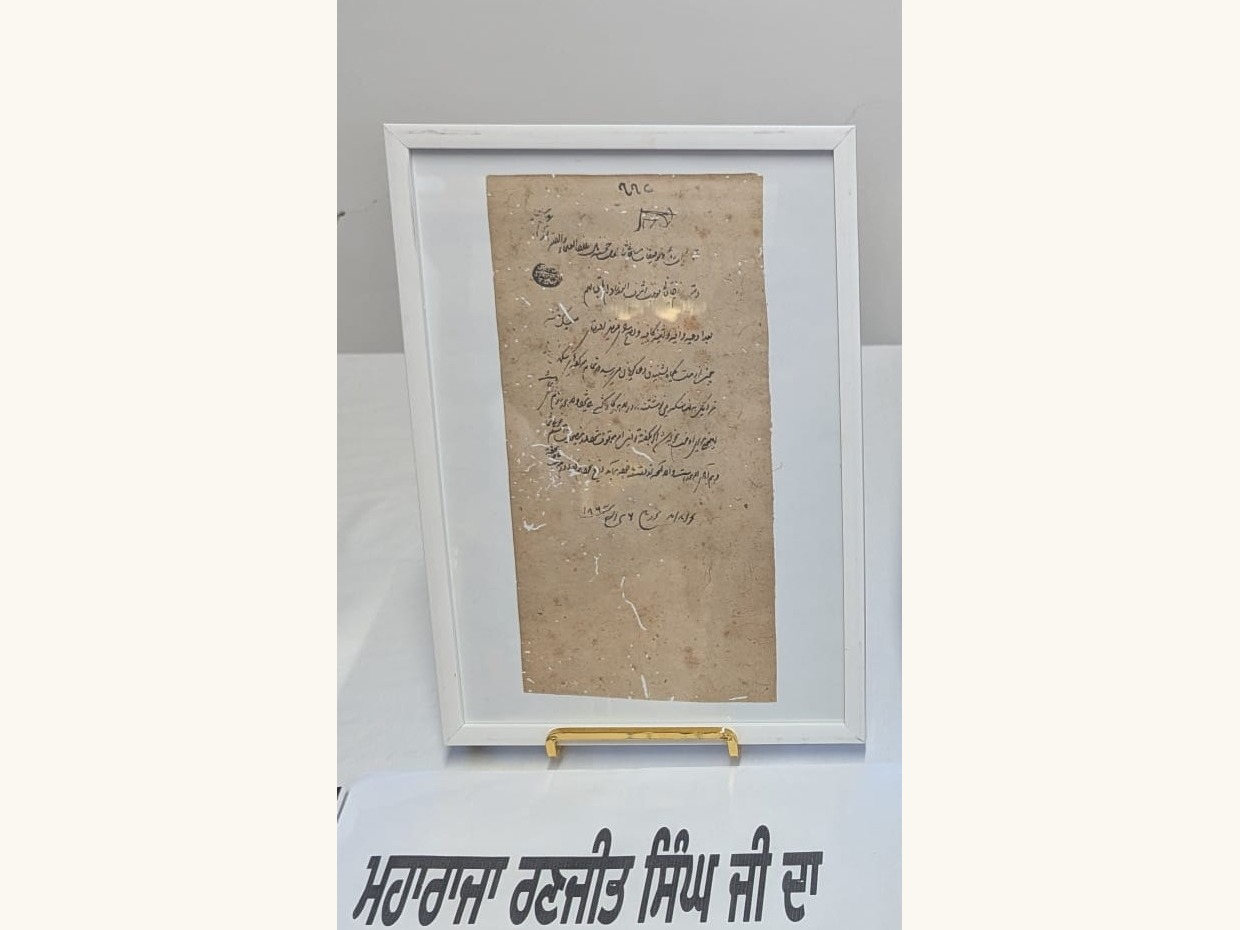
Royal Decree from Maharaja Ranjit Singh Ji
During the height of the Sikh Empire, Maharaja Ranjit Singh Ji issued an official royal decree — a Farman — acknowledging the historical reverence and custodianship of Bhai Roop Chand Ji's descendants.
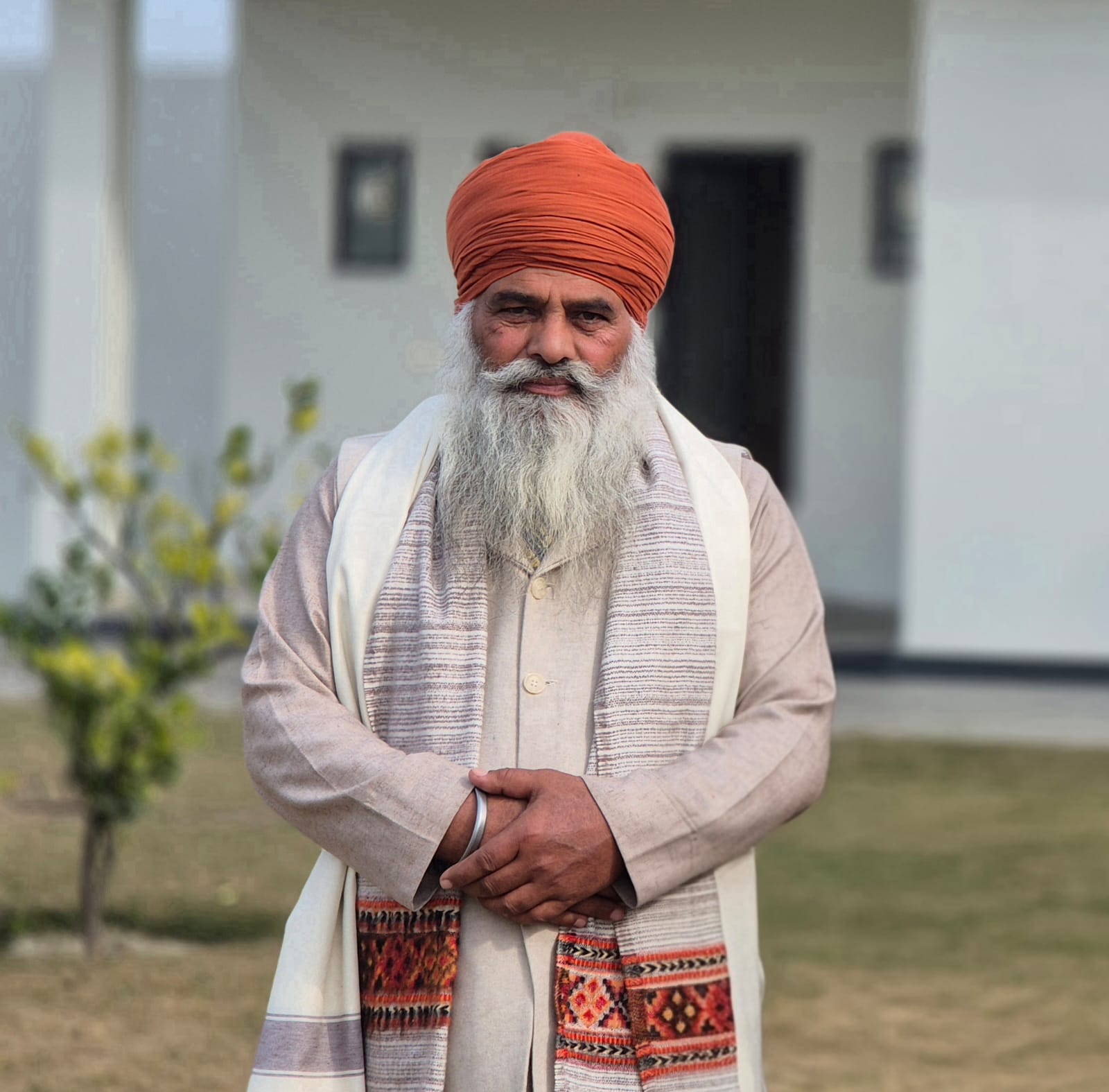
Bhai Balvir Singh Ji
Bhai Balvir Singh Ji, of the twelfth generation of Bhai Roop Chand Ji. His son Bhai Pal Singh Ji continued the safekeeping of the relics after him, and it is through this line that the trust passes to the present custodian.
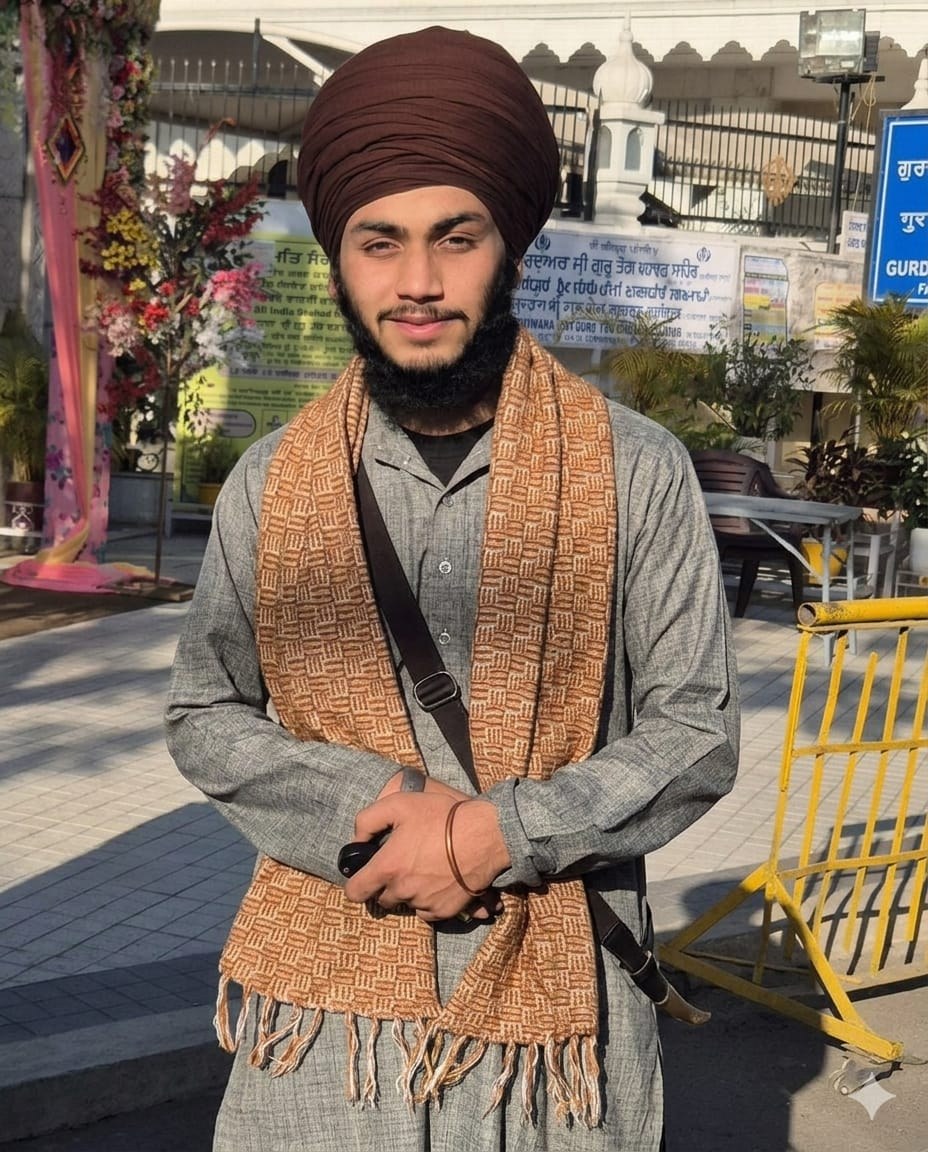
The Relics Today, and the Villages of the Lineage
The historic relics bestowed by the Guru Sahibaan and their households, in their pleasure at Bhai Roop Chand Ji's seva, are present today at village Bhai Rupe, district Bathinda, with his heirs, who have carried out their safekeeping generation after generation. Bhai Jaskaran Singh now carries out the preservation of the relics and travels to countries abroad so that the sangat may take their darshan, while at Bagarian Bhai Ke, Bhai Jujhar Singh is carrying out the safekeeping. The descendants of Bibi Surti Ji and Bhai Roop Chand Ji are settled today in the villages of Bhai Rupa, Bhai Ki Samadh, Nehianwala Chhatti, Bhai Ki Bagarian and Bhai Ka Dialpura.